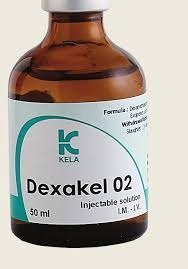
Dexakel 02 (Dexakelum 02).
1.0 cm 3 of the preparation contains 2.64 mg of dexamethasone sodium phosphate (equivalent to 2 mg of dexamethasone)
Aqueous sterile solution, contains dexamethasone phosphate eq. 2 mg dexamethasone fillers up to 1 ml. Available in bottles of 50 ml.
Dexamethasone is a synthetic glucocorticosteroid with a strong anti-inflammatory effect with extraordinary antiallergic, anti-stress and gluconeogenetic properties.
Description for DEXAKEL 02:
I. General information
Name of the preparation: Dexakel 02 (Dexakelum 02).
1.0 cm 3 of the preparation contains 2.64 mg of dexamethasone sodium phosphate (equivalent to 2 mg of dexamethasone); sodium EDTA, sodium citrate, sodium methyl parahydroxybenzoate, N-methylpyrrolidone, hydrochloric acid, water for injection.
The drug is a clear, colorless, odorless solution.
Dexacel 02 is available in dark glass bottles with a nominal volume of 50.0 cm 3 .
The drug is stored with caution (list B) at a temperature of 2 ° C to 8 ° C in dry, protected from sunlight, places inaccessible to children.
Shelf life 4 years from the date of manufacture.
II. Pharmacological properties
Dexamethasone is a synthetic analogue of the glucocorticosteroid hormone of the adrenal cortex – cortisol (hydrocortisone). It has anti-inflammatory, anti-allergic, desensitizing, immunosuppressive, anti-shock and anti-toxic effects. The mineralocorticoid effect is negligible.
Dexamethasone inhibits all phases of inflammation. It inhibits phospholipase-A2, thereby disrupting the formation of prostaglandins and leukotrienes. In addition, dexamethasone stabilizes cell membranes, lysosome membranes, reduces capillary permeability, inhibits the migration of neutrophils and macrophages into the focus of inflammation and their phagocytic activity, inhibits the proliferation of fibroblasts and the formation of collagen and cytokines. It also inhibits the synthesis and disrupts the kinetics of T-lymphocytes, reduces their cytotoxic activity.Dexamethasone has a counterinsular effect (it stimulates gluconeogenesis in the liver, reduces the permeability of membranes for glucose, and causes hyperglycemia and glucosuria).



Reviews
There are no reviews yet.